The Core Importance of Energy Storage Air Conditioners in Modern BESS Development
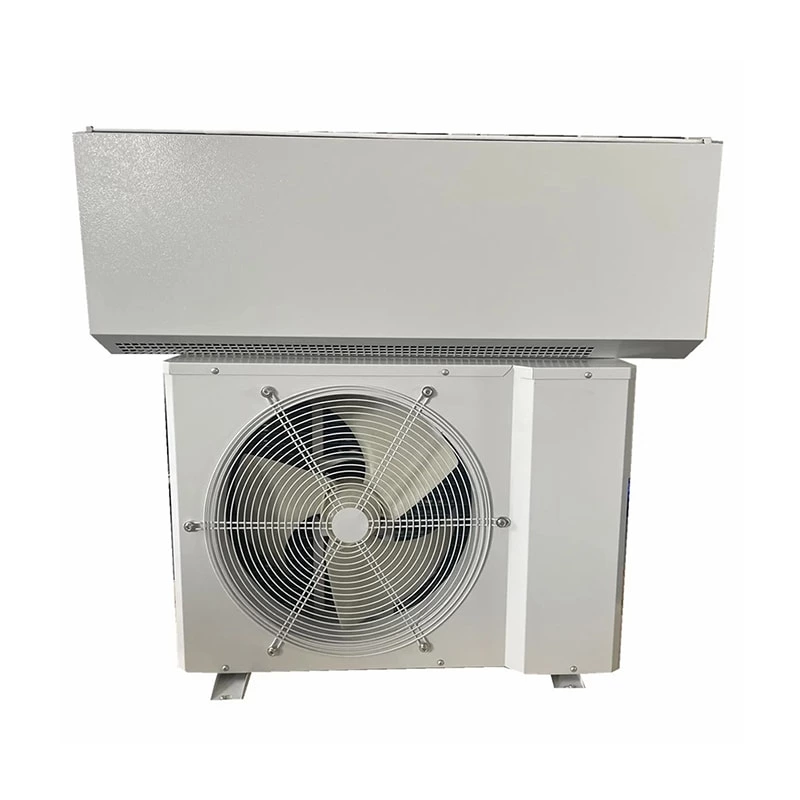
With the rapid advancement of global energy transition and the large-scale popularization of battery energy storage systems (BESS), energy storage air conditioners have evolved from auxiliary supporting equipment into a core functional component that determines the safety, efficiency and economic life of energy storage stations. Unlike traditional commercial and industrial air conditioners, energy storage-specific air conditioning systems are tailor-made for containerized and cabinet-type energy storage scenarios, undertaking precise thermal management, heat dissipation and temperature regulation tasks. In the context of explosive growth in global new energy storage installations, the importance of professional energy storage air conditioners has become increasingly prominent, serving as an indispensable guarantee for the healthy and sustainable development of the entire energy storage industry.
First and foremost, energy storage air conditioners are the core barrier for BESS operational safety. Lithium-ion batteries, the mainstream power source of current energy storage projects, are extremely sensitive to ambient temperature and temperature difference. Battery thermal runaway, one of the most severe safety hazards of energy storage stations, is mostly triggered by local overheating, excessive temperature fluctuation, and accumulated heat inside closed containers. Traditional heat dissipation methods such as natural ventilation and ordinary industrial air conditioners cannot adapt to the closed, high-load and long-cycle operating environment of energy storage containers, failing to eliminate hidden thermal risks effectively. Professional energy storage air conditioners support constant-temperature and uniform heat dissipation, real-time temperature monitoring, and linkage fire protection functions, which avoid local overheating and excessive temperature differences among battery clusters. By maintaining a stable and safe operating temperature range, these devices fundamentally reduce the probability of thermal runaway accidents and ensure the intrinsic safety of energy storage power stations throughout their lifecycle.
Secondly, efficient thermal management by energy storage air conditioners significantly improves battery performance and service life. Battery charging and discharging efficiency, capacity retention rate and aging speed are closely related to operating temperature. Long-term operation in high-temperature environments will accelerate battery capacity attenuation, while low-temperature conditions will reduce charge-discharge efficiency and restrict energy storage power grid regulation capabilities. Energy storage air conditioners achieve intelligent frequency conversion and precise temperature control according to real-time battery operating status and environmental changes. They effectively slow down battery aging, maintain stable energy storage and power supply efficiency, and greatly extend the service cycle of battery packs. For energy storage investors, prolonged battery service life directly reduces equipment replacement costs and improves the long-term return on investment of energy storage projects.
In addition, energy storage air conditioners are key equipment to reduce station operation costs and improve economic benefits. Modern energy storage air conditioning systems adopt high-energy-efficiency compressor technology and intelligent energy-saving control logic, which can automatically adjust cooling power according to operating load, avoiding the high energy consumption waste of traditional fixed-frequency cooling equipment. As the long-term running auxiliary equipment of energy storage stations, its energy-saving advantage effectively reduces the overall power consumption and operating cost of the system. Meanwhile, intelligent remote monitoring and fault self-diagnosis functions realize unattended operation, reduce manual operation and maintenance investment, and further optimize the operational economy of energy storage stations. In the current competitive energy storage market, refined energy-saving and low-cost operation have become important competitive advantages of energy storage projects.
Furthermore, energy storage air conditioners support the large-scale and standardized development of the global energy storage industry. In recent years, countries worldwide have continuously upgraded BESS safety and operation standards, and professional thermal management air conditioning equipment has been listed as mandatory supporting facilities for new energy storage projects. The popularization of standardized, high-reliability energy storage air conditioners has solved the scenario adaptation pain points of traditional cooling equipment, promoted the unified construction standards of containerized energy storage stations, and laid a foundation for the large-scale batch construction of grid-side, industrial and commercial distributed energy storage projects. In addition, with the innovation of solar-coupled energy-saving cooling technology, energy storage air conditioners further reduce the carbon footprint of energy storage stations, conforming to the global low-carbon development goals and empowering the green and high-quality development of the new energy industry.
In conclusion, energy storage air conditioners are no longer marginal auxiliary equipment but core thermal management systems related to BESS safety, efficiency, economy and standardized development. With the continuous expansion of global energy storage scale and the continuous improvement of industry safety requirements, the strategic importance of high-performance energy storage air conditioners will be further highlighted. It will remain a key cornerstone to guarantee the stable operation of new energy storage systems and promote the high-quality development of the energy transition industry.